Hair Transplant in Islamabad: How FUE and FUT Work, Aftercare
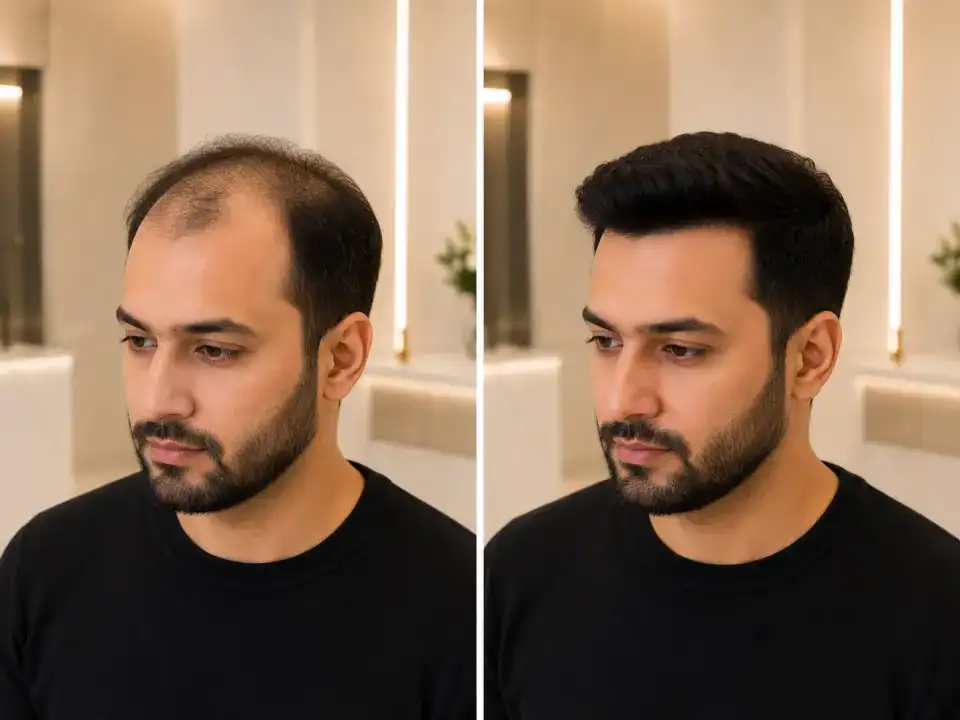
If you are considering a hair transplant in Islamabad, Pakistan, the first thing to know is that it moves your own hair follicles from denser areas of the scalp to thinning areas. Suitability depends on the cause of your hair loss, and it is decided at a consultation. This guide explains how the procedure works, who it suits, what recovery involves and how to choose a clinic. For general background on hair loss, see the NHS overview of hair loss.
What a hair transplant is and how it works
Hair follicles at the back and sides of the scalp are usually less affected by pattern hair loss. In a transplant, a practitioner takes follicles from these donor areas and places them into the thinning or bald areas under local anaesthesia. Once the follicles settle, the transplanted hairs shed and then regrow gradually over many months.
Our Hair Transplant FUE/FUT service covers the two main techniques, which are explained below.
FUE and FUT: the two main techniques
- FUE (follicular unit extraction): individual follicles are removed one by one with a small instrument, leaving tiny dot-like marks that are usually easy to hide.
- FUT (follicular unit transplantation): a thin strip of scalp is removed and divided into grafts under magnification, which leaves a linear scar hidden by surrounding hair.
Each technique has strengths and limits. Your practitioner will explain which one fits your hair type, donor supply and goals.
Who may be suited, and who may not
A transplant may suit people with stable pattern hair loss who still have enough healthy donor hair. It may also be considered for restoring hairlines or filling thin patches.
It may not suit everyone. Examples include:
- People whose hair loss is still changing quickly or whose cause is not yet understood
- Those with very limited donor hair
- People with certain scalp conditions or medical issues that need treating first
Hair fall has many causes, such as nutrition, hormones, stress and scalp conditions. A proper assessment comes before any decision about surgery. Some people begin with non-surgical support such as Hair PRP (platelet rich plasma), and you can compare the two approaches in our guide on hair transplant versus PRP therapy.
What to expect at the clinic
A typical journey has a few stages:
- Consultation: your scalp, hair density, medical history and expectations are reviewed.
- Planning: the hairline design and the number of grafts are discussed.
- Procedure: the scalp is numbed, follicles are harvested and then placed in the recipient area.
- Review: follow-up visits check how the scalp is healing.
The procedure can take many hours depending on the area treated, so you should plan your day accordingly. Annaliza Estetica Clinic is based in Bahria Town, and our plastic and cosmetic procedures page shows the wider range of surgical options we offer.
Aftercare and recovery in general terms
Recovery differs from person to person, and your practitioner will give instructions specific to you. In general terms:
- Mild redness, swelling and small scabs are common in the first days.
- You will usually be asked to avoid scratching, heavy exercise and direct sun on the scalp for a period.
- Transplanted hairs often shed before new growth starts, which is a normal part of the cycle.
- Growth is gradual, and visible change takes months. Results vary.
Supportive options such as mesotherapy are sometimes discussed alongside hair care plans, and skin and hair regeneration treatments can be reviewed at your consultation.
What affects the cost of a hair transplant
Because every scalp is different, we do not quote fixed figures in a guide. Factors that commonly influence the cost include:
- The number of grafts needed
- The technique chosen
- The size of the area being treated
- The experience of the team and the clinic setting
- Follow-up care and any supportive treatments
A written plan after your consultation helps you understand what is included.
How to choose a clinic for hair restoration
General guidance on choosing a provider for cosmetic procedures from the NHS is a useful starting point. Questions worth asking include:
- Who will perform the procedure, and what is their training?
- Which technique do they recommend for you, and why?
- What are the possible risks and limits?
- What follow-up is offered?
Our article on how to choose an aesthetic clinic in Islamabad gives a fuller checklist. You can also browse all services to see what is available.
Frequently asked questions
Is a hair transplant suitable for everyone?
No. It depends on the cause of hair loss, the donor hair available and your general health. A consultation is the way to find out.
Will the transplanted hair look natural?
Natural-looking outcomes depend on careful hairline planning and graft placement, but results vary between people.
How long until I see growth?
Shedding often happens first, and new growth usually appears gradually over several months.
Does the procedure hurt?
Local anaesthesia is used so the scalp is numbed. Some tenderness afterwards is common and your practitioner will advise on managing it.
Can I combine it with other hair treatments?
Some people use supportive therapies alongside surgery. Your practitioner can advise what makes sense for your situation.
Book a consultation in Bahria Town, Islamabad
If you are exploring hair restoration, the next step is a conversation. The practitioners at Annaliza Estetica Clinic can assess your hair loss, explain your options and answer your questions. Visit our home page to get in touch and book a consultation in Bahria Town, Islamabad.